

Key takeaways
l An 8–10 kW solar power inverter for home provides suitable capacity for a standard 7 kW home EV charger.
l A 10–12 kWp PV array extends solar-supported charging, while a whole house battery backup can shift midday generation into the night.
l FRECON SP520 Plus is better suited to lower-rate EV charging or separately managed essential loads.
Charging an EV with solar power requires the PV array, inverter, charger, and battery storage to work as one system. A solar inverter for home converts panel-generated DC into stable AC for household loads and EV charging. This article explains how to determine the right size of a solar power inverter for home EV charging and what factors influence the final system configuration.
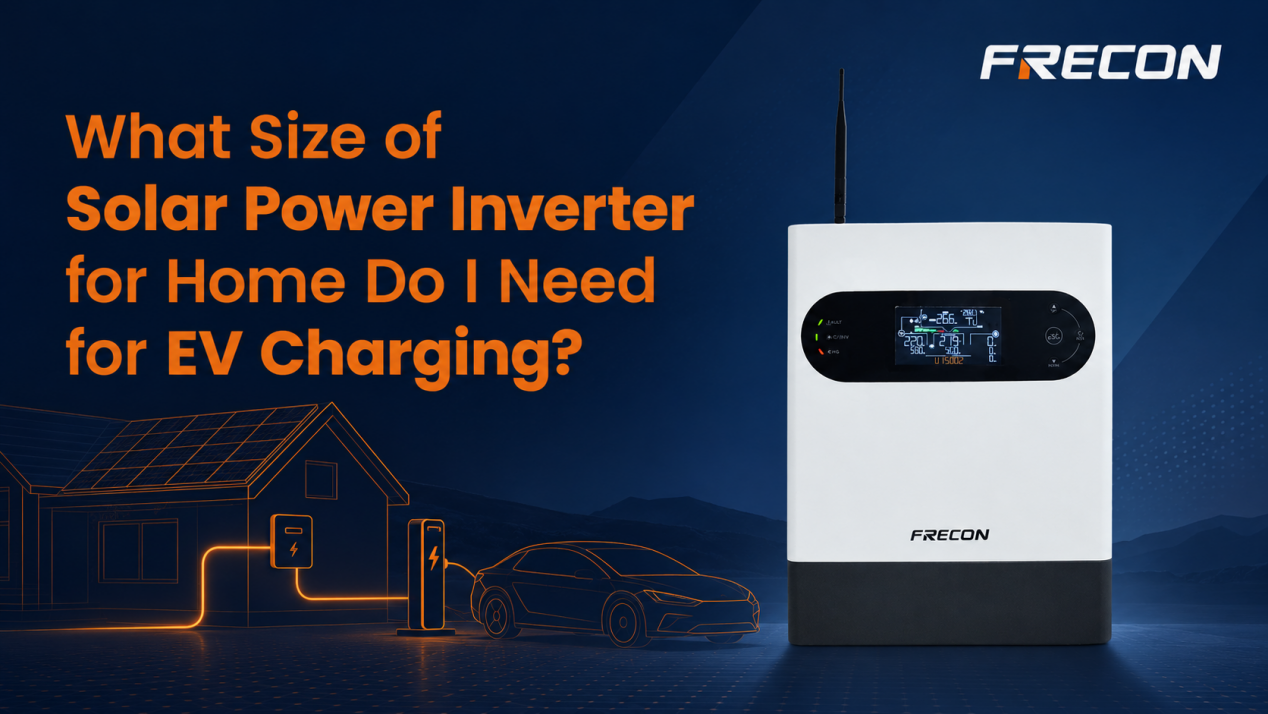
What Size of Solar Power Inverter for Home Do I Need for EV Charging?
For a 7 kW Level 2 charger, the direct answer is an 8–10 kW solar power inverter for home. The extra 1–3 kW keeps the continuous charging load below the inverter’s AC ceiling.
l Charging Loads: A 7 kW inverter would remain at its ceiling during full-rate charging. A 7 kW inverter would be fully occupied, whereas another 1–3 kW leaves headroom for lighting, refrigeration, and standby equipment.
l Array Oversizing: Solar panels do not maintain rated output all day. Generation rises toward midday and then falls, so a larger array extends useful production. An 8–10 kW solar power inverter for home converts more of this DC supply before reaching its AC limit.
l Single-Phase vs. Three-Phase Limitations: A single-phase charger places 7 kW on one phase. A three-phase inverter divides output among phases, so its full rating may not serve that charger. The 8–10 kW range assumes 7 kW is available through the charger’s phase arrangement.
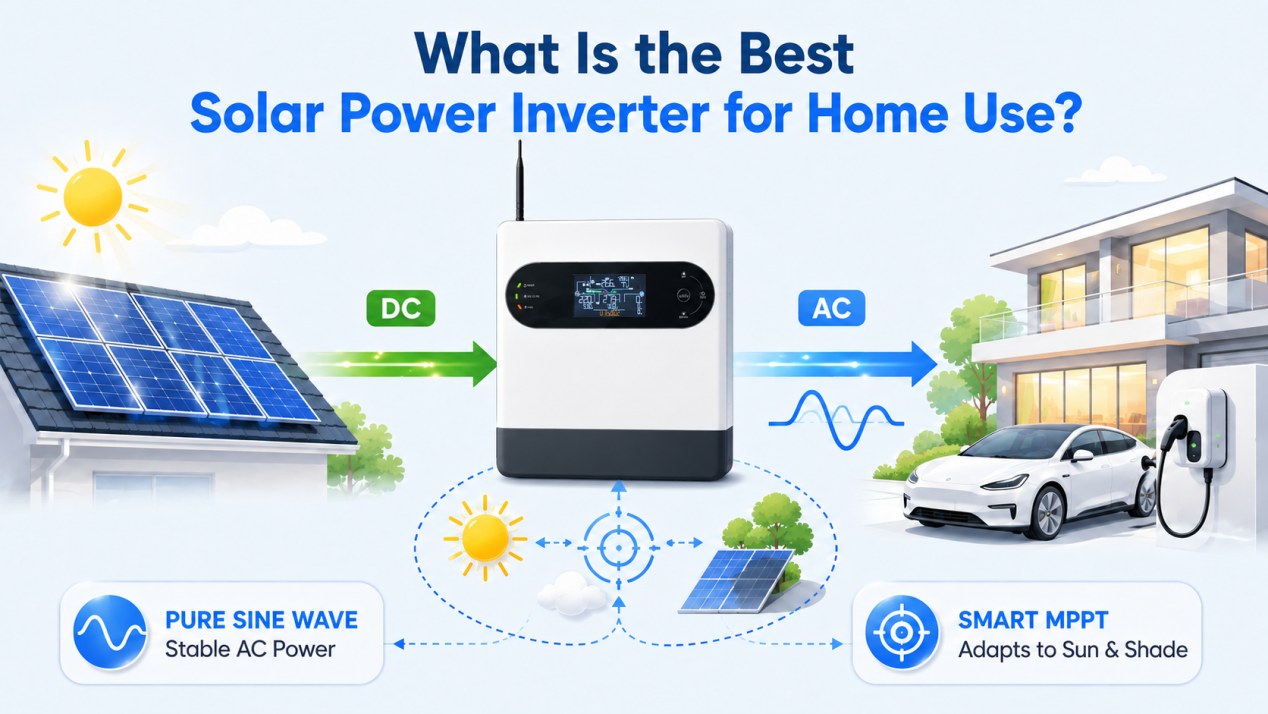
What Is the Best Solar Power Inverter for Home Use?
The best solar power inverter for home converts panel DC into pure sine wave AC and extracts available solar power efficiently. These functions depend on waveform control and MPPT.
DC-to-AC Conversion and Pure Sine Wave Output
Solar panels produce direct current, which flows in one direction. Home appliances and AC chargers use alternating current, which changes direction periodically. They cannot connect directly, so the inverter converts solar DC into household AC.
Pure sine wave output closely matches utility power, allowing the charging station and onboard electronics to recognize the supply and operate steadily. Irregular waveforms may cause instability, heating, or protection trips.
MPPT Under Changing Weather
Sunlight, temperature, and shading change the panels’ best operating voltage. Maximum Power Point Tracking (MPPT) adjusts voltage and current to find maximum available power, helping a solar power inverter for home collect more energy as conditions change.
How Does a Home EV Charger Impact Inverter Sizing?
A 7 kW home EV charger creates a sustained load. If the inverter supplies 5 kW, the grid provides the remaining 2 kW throughout charging, increasing imports and applicable peak-demand costs.
l Converting EV Energy Use into a Continuous Load: An EV using 16 kWh per 100 km needs about 2.3 hours to replace that energy at 7 kW before losses. A 50 km journey uses about 8 kWh. Distance changes duration, but full-rate demand stays near 7 kW.
l The Solar Array Disconnect: An EV using 16 kWh per 100 km needs about 2.3 hours to replace that energy at 7 kW before losses. A 50 km journey uses about 8 kWh. Distance changes duration, but full-rate demand stays near 7 kW.
l Energy Clipping: At midday, array DC power may exceed the inverter’s AC ceiling. The inverter then limits the excess. This energy clipping reduces annual solar yield when it occurs frequently.
Can I Use a Whole House Battery Backup for Overnight Charging?
Yes. A DC-coupled whole house battery backup stores midday solar for use after sunset, reducing grid imports. It needs sufficient usable energy and at least 7 kW of continuous discharge power.
AC-Coupled vs. DC-Coupled Storage
AC coupling uses a separate inverter, simplifying retrofits but adding DC–AC–DC conversions; clipped PV energy cannot reach the battery. DC coupling shares a DC bus, reduces conversions, and captures surplus power before the AC limit. Both designs must sustain the vehicle load.
Why DC Coupling Captures Clipped Energy
When array output exceeds the inverter’s AC rating, a DC-coupled controller routes raw DC into the battery before the inverter. This completely bypasses clipping while charge capacity remains available. The whole house battery backup converts the energy into AC later.
Why Automatic Cell Balancing Is Essential
Daily EV charging creates frequent cycles. Capacity and resistance differences make weaker cells reach voltage limits first. Automatic balancing is essential to equalize charge, limit uneven wear, and prevent one cell from restricting the string.
FRECON SP520 Plus for Home Solar Applications
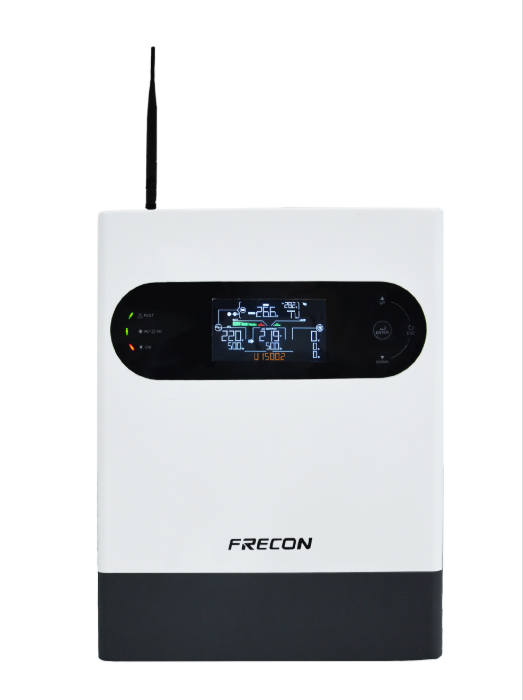
The FRECON SP520 Plus is a pure sine wave off-grid solar power inverter for home EV charger or separately managed essential loads.
l High-Voltage PV String Input
Its 120–450 VDC MPPT range and 500 VDC maximum open-circuit voltage support long series strings. Higher voltage and fewer parallel strings reduce current, cable runs, field copper, wiring work, and installation labour.
l Dry-Contact Communication
The dry contact provides an electrically isolated switching signal. This galvanic isolation reduces interference and enables compatible generator start/stop, alarm, fan, or automation-warning integration without directly powering the external device.
l Three-Phase Battery-Free Operation
SP520 Plus can operate as a three-phase off-grid inverter without a battery, allowing daytime PV to supply loads directly. Because the individual specifications list 230 VAC output, confirm the required three-phase configuration with FRECON.
Conclusion
Selecting an 8-10 kW solar power inverter for home for a standard 7 kW charger provides the output headroom needed for continuous charging and basic household loads. A 10- 12 kWp array can extend solar-supported charging, although appropriate inverter capacity is necessary to control clipping and protect annual solar yield.
For home EV charger applications or separately managed essential loads, FRECON SP520 Plus provides pure sine wave output, high-voltage PV input, dry-contact communication, and battery-free operation.
Visit FRECON to explore more inverter solutions and discuss the appropriate configuration for your project.