

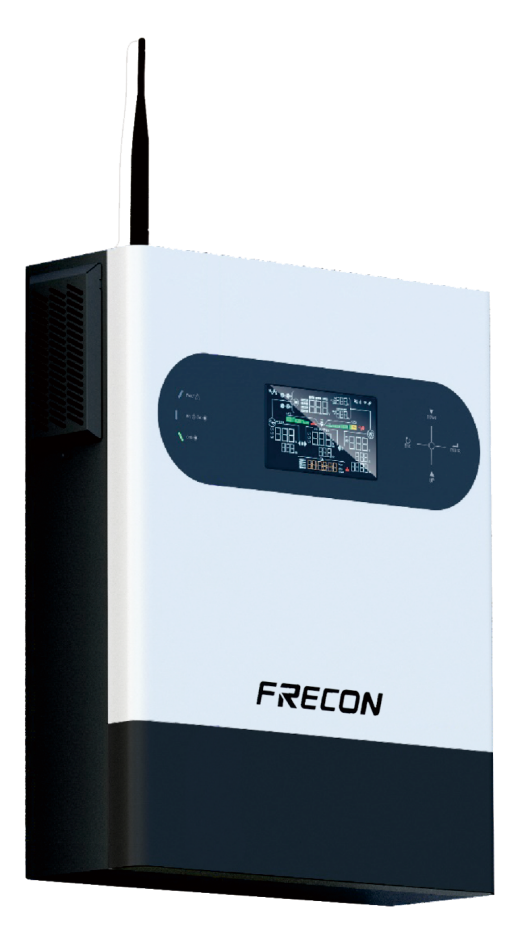
In many renewable energy projects, users are increasingly asking whether an off grid power inverter can function without a battery. While this question may seem simple, the answer depends on how the system is designed and what kind of performance is expected. At FRECON, we focus on creating efficient and flexible off-grid systems, such as the SP520 PLUS, which can adapt to various installation needs and power configurations.
Understanding the Role of an Off Grid Power Inverter
An off grid power inverter serves as the heart of an independent energy system. It converts the direct current (DC) produced by solar panels into alternating current (AC) for powering household or industrial devices. Unlike grid-tied systems, off-grid setups are not connected to the utility network, so they must manage energy production and consumption internally. This makes batteries an important component for energy storage and supply during periods of low sunlight.
However, in some setups, users consider operating a solar inverter off grid without connecting it to a battery. This configuration can work in certain situations, but it comes with specific requirements and limitations.
Operating Without a Battery: Possibilities and Limitations
A solar inverter off grid can technically operate without a battery if it includes an integrated Maximum Power Point Tracking (MPPT) controller and supports direct solar-to-load power supply. In this setup, solar energy directly powers the connected appliances when sunlight is available. The FRECON SP520 PLUS, for example, allows flexible input prioritization from AC, solar, or battery sources, making it suitable for applications where a battery is optional.
However, without a battery, the system cannot store energy for use during the night or cloudy periods. Power output depends entirely on solar generation at that moment, which can lead to an unstable supply if solar irradiance fluctuates. For businesses or facilities requiring constant power—such as telecom sites or remote monitoring stations—batteries remain essential to ensure uninterrupted operation.
The Advantages of Using a Battery with an Off Grid System
Integrating a battery with an off grid power inverter enhances system reliability and energy efficiency. The FRECON SP520 PLUS incorporates an intelligent battery management system that balances charging and discharging cycles, helping extend battery lifespan. During peak sunlight hours, excess energy can be stored in batteries and used later when solar input drops.
This setup provides three major benefits:
Continuous power supply – eliminating downtime caused by variable sunlight.
Improved energy utilization – maximizing the use of solar energy throughout the day.
Stable performance – supporting sensitive electronics that require consistent voltage.
By combining smart power management with pure sine wave output, FRECON ensures that connected equipment operates smoothly and safely under all conditions.
Conclusion
While it is possible for an off-grid solar inverter to function without a battery, this configuration is best suited for applications where power demand aligns with solar generation hours. For most residential, commercial, or telecom uses, pairing the inverter with a battery is the more practical solution. FRECON's SP520 PLUS pure sine wave off grid power inverter provides the flexibility to operate with or without batteries while maintaining high efficiency and system stability. It delivers a reliable, independent power source for users seeking sustainable energy solutions in remote or unstable grid environments.