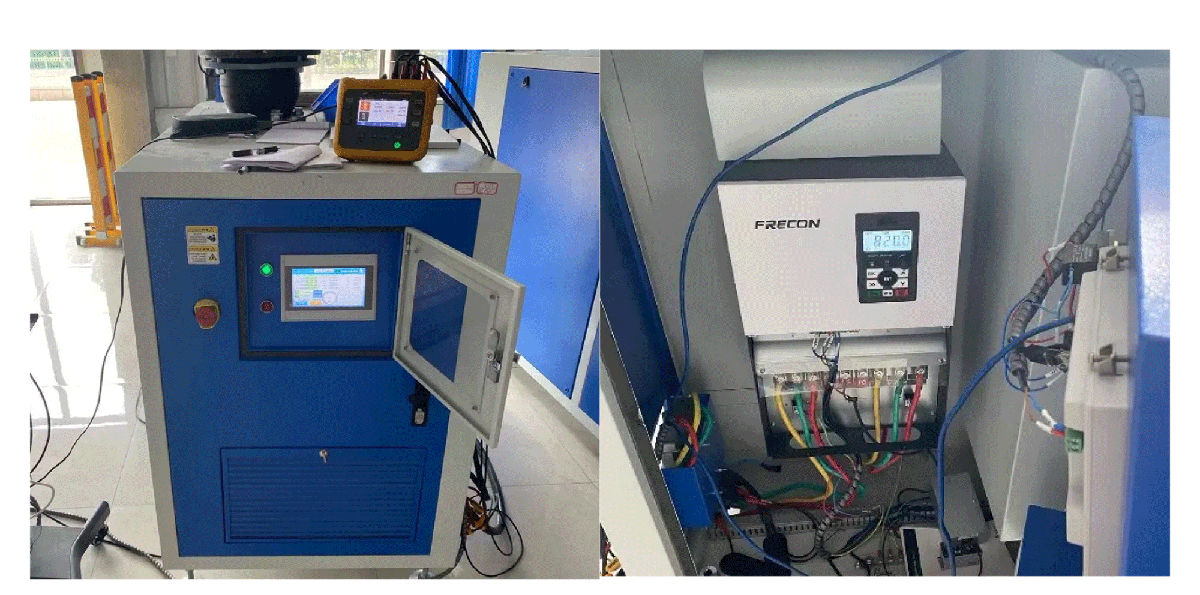

With tightening environmental policies and the advancement of industrial energy conservation transformation, air-suspended centrifugal blowers, with their core advantages of contactless suspension operation, low noise and energy saving, and clean air source, are widely used in scenarios with stringent requirements for air source quality and energy consumption, such as wastewater treatment aeration, chemical reaction gas supply, and ventilation in electronic cleanrooms.
They rely on air-suspended bearing technology to achieve ultra-high speed operation, and traditional control methods are difficult to match the precise speed regulation requirements, easily leading to problems such as large start-stop shocks, air pressure fluctuations, and high energy consumption. FRECON Electric's FR20 general-purpose inverter, with its multi-dimensional adaptability and reliable performance, has become the ideal control solution for air-suspended centrifugal blowers.
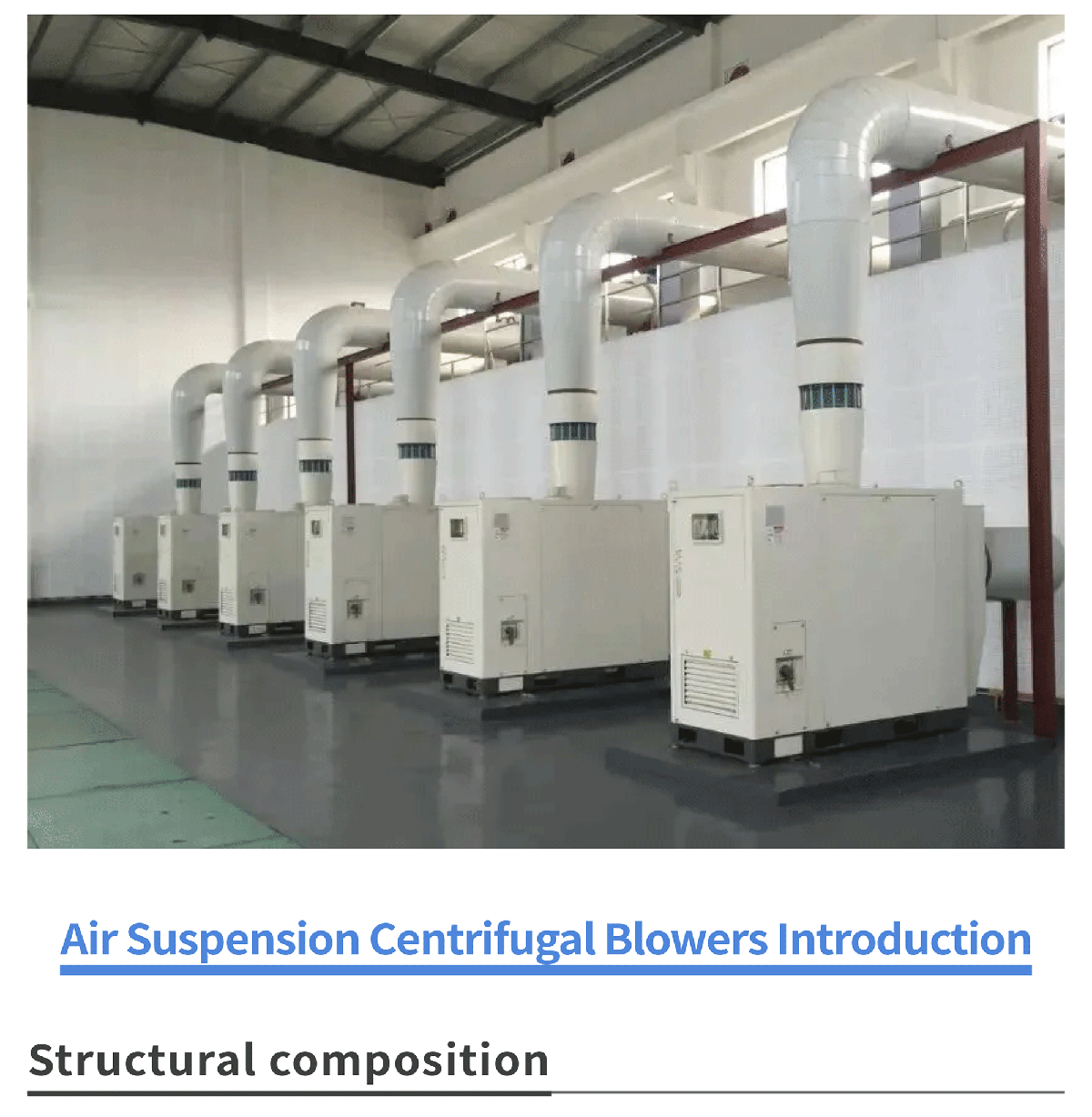
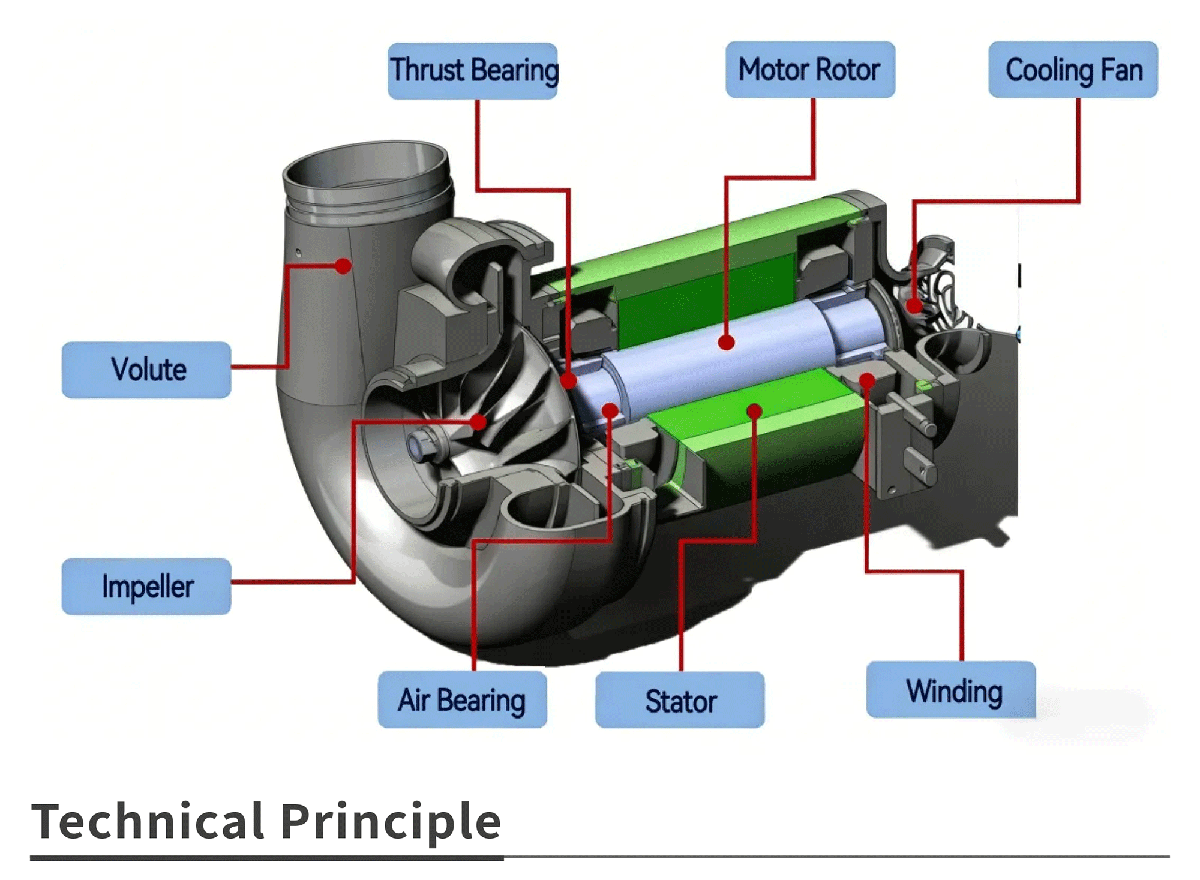
The core of the air-suspended centrifugal blower consists of an air-suspended bearing, a high-speed permanent magnet synchronous motor, a centrifugal impeller, an FR20 inverter, an intelligent control system, and a cooling system.
The air-suspended bearing is the core technology component, the high-speed permanent magnet synchronous motor provides power output, and the FR20 inverter is responsible for precise speed control. These components work together to achieve contactless, low-loss, and stable blower operation.
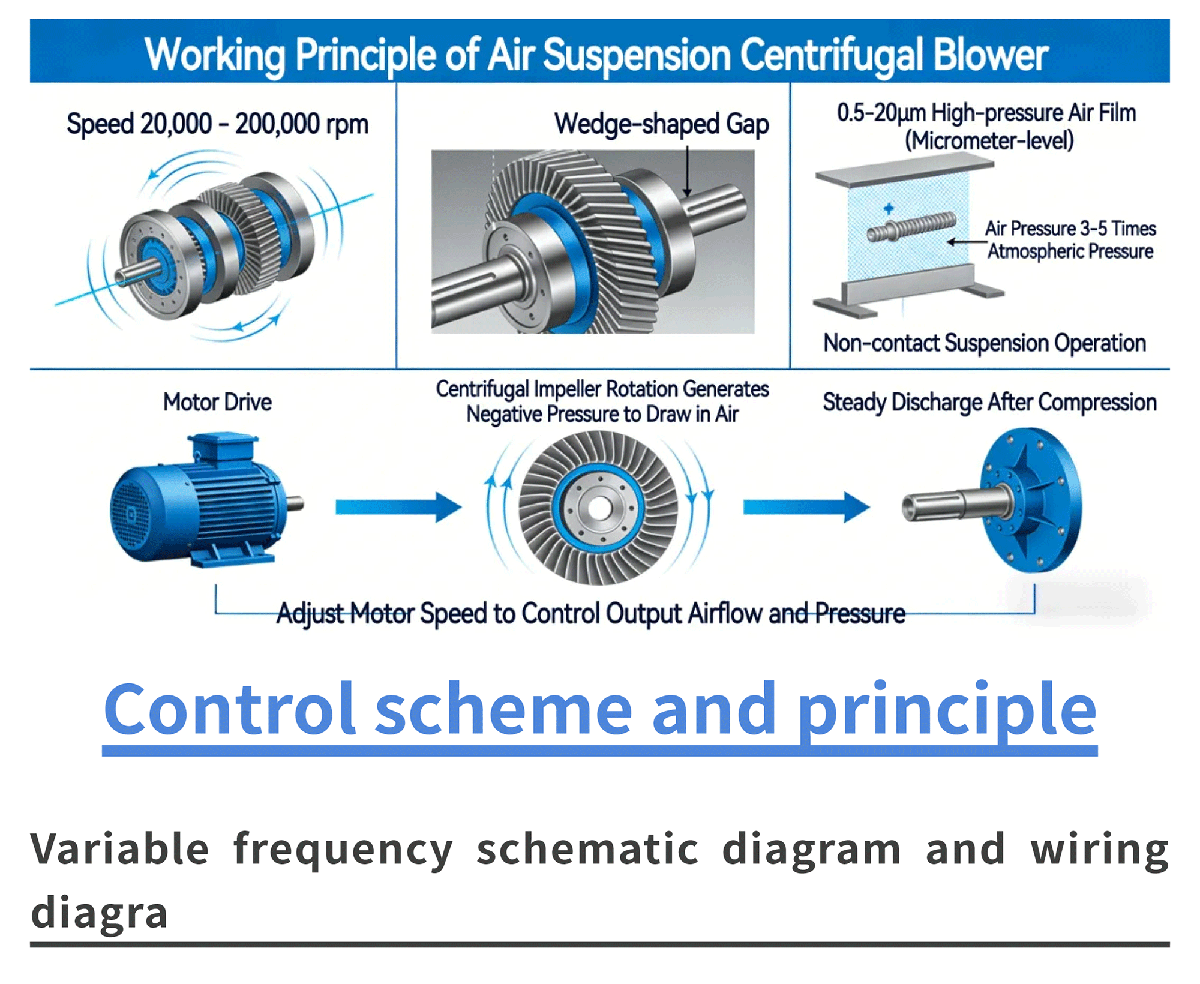
The core of the air-suspended centrifugal blower lies in its air-suspended bearing technology: when the rotor rotates at high speed (up to 20,000-200,000 rpm), a wedge-shaped gap is formed between the rotor and the foil bearing.
The high-speed rotating gas is compressed to form a micron-level high-pressure air film of 0.5-20μm (the air pressure can reach 3-5 times that of atmospheric pressure), completely lifting the rotor to achieve contactless suspension operation.
This eliminates mechanical friction and results in extremely low energy loss.
The motor drives the centrifugal impeller to rotate, generating negative pressure to draw in air, which is then compressed and stably discharged.
The output air volume and pressure can be precisely controlled by adjusting the motor speed to adapt to different operating conditions.
To address the ultra-high speed control and energy-saving requirements of air-suspended centrifugal blowers, the user adopted FR20 inverter for system integration. The core circuit design and wiring diagram are as follows:
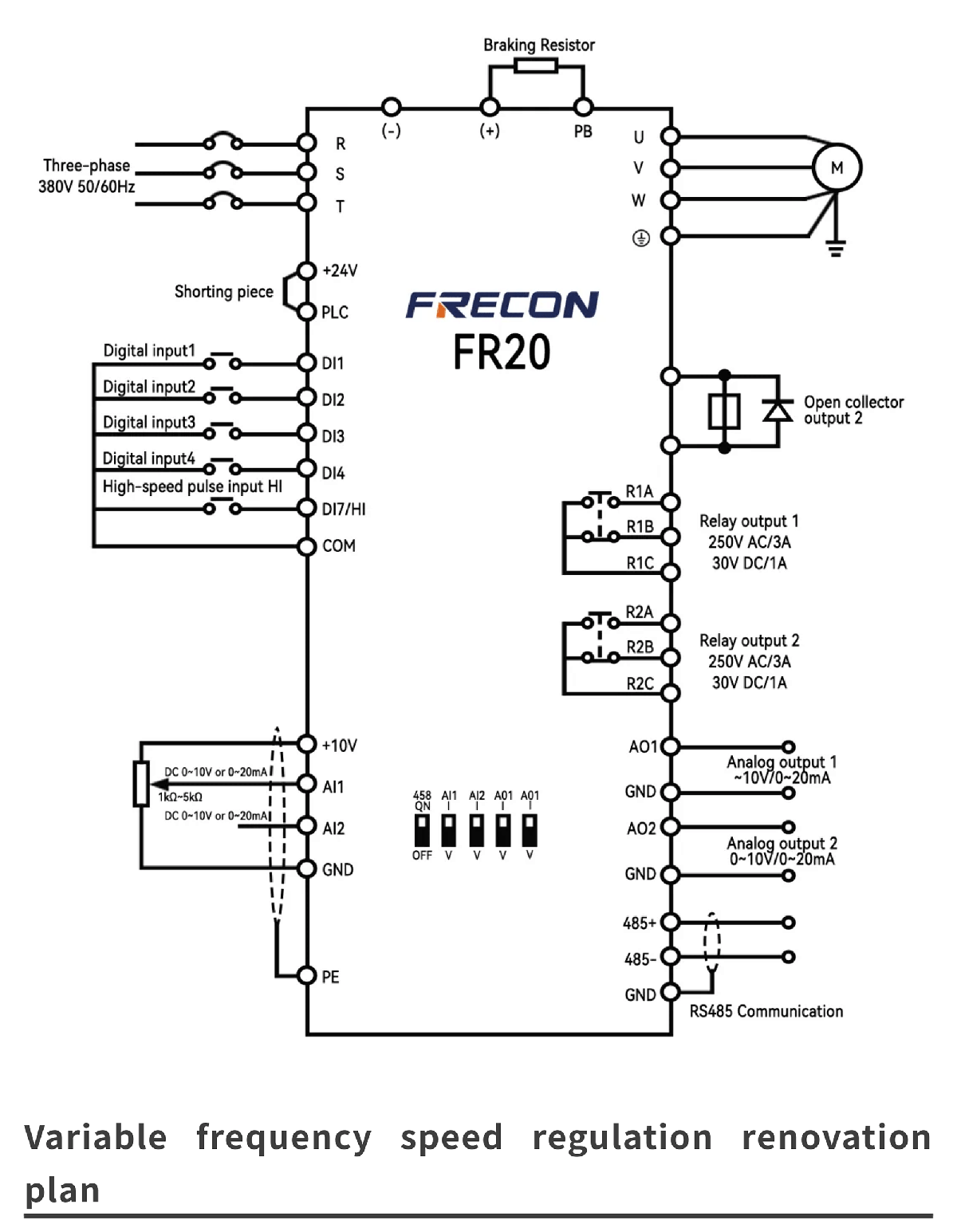
Based on the operating characteristics of the air-bearing blower and the core features of the FR20 inverter, the retrofit plan focuses on optimization:
1. Relying on the built-in DC reactor of FR20, it improves the power factor, suppresses harmonic interference, balances voltage fluctuations, ensures stable output current, provides clean power for high-speed motors, and is suitable for application scenarios with high requirements for air source cleanliness.
2. By utilizing FR20 vector control technology and speed tracking function, a smooth and shock-free start-up is achieved based on the real-time operating status of the motor, avoiding impact damage to the air suspension bearing during start-up and shutdown, and extending the service life of the equipment;
3. With the FR20's high-precision speed regulation function (resolution up to 0.1Hz), precise speed regulation within the range of 20,000-200,000 rpm is achieved, ensuring stable air film thickness and solving the problem of air pressure fluctuation in traditional control systems.;
4. Equipped with a standard C3 filter and independent air duct design, it is adaptable to harsh environments and effectively prevents dust from entering the inverter. Combined with PCB conformal coating, it ensures long-term stable operation of the equipment in industrial settings.;
5. Supports linkage between field control boxes, PLCs and DCS systems, enables real-time monitoring of operating status through rich IO interfaces, and has built-in multiple protections such
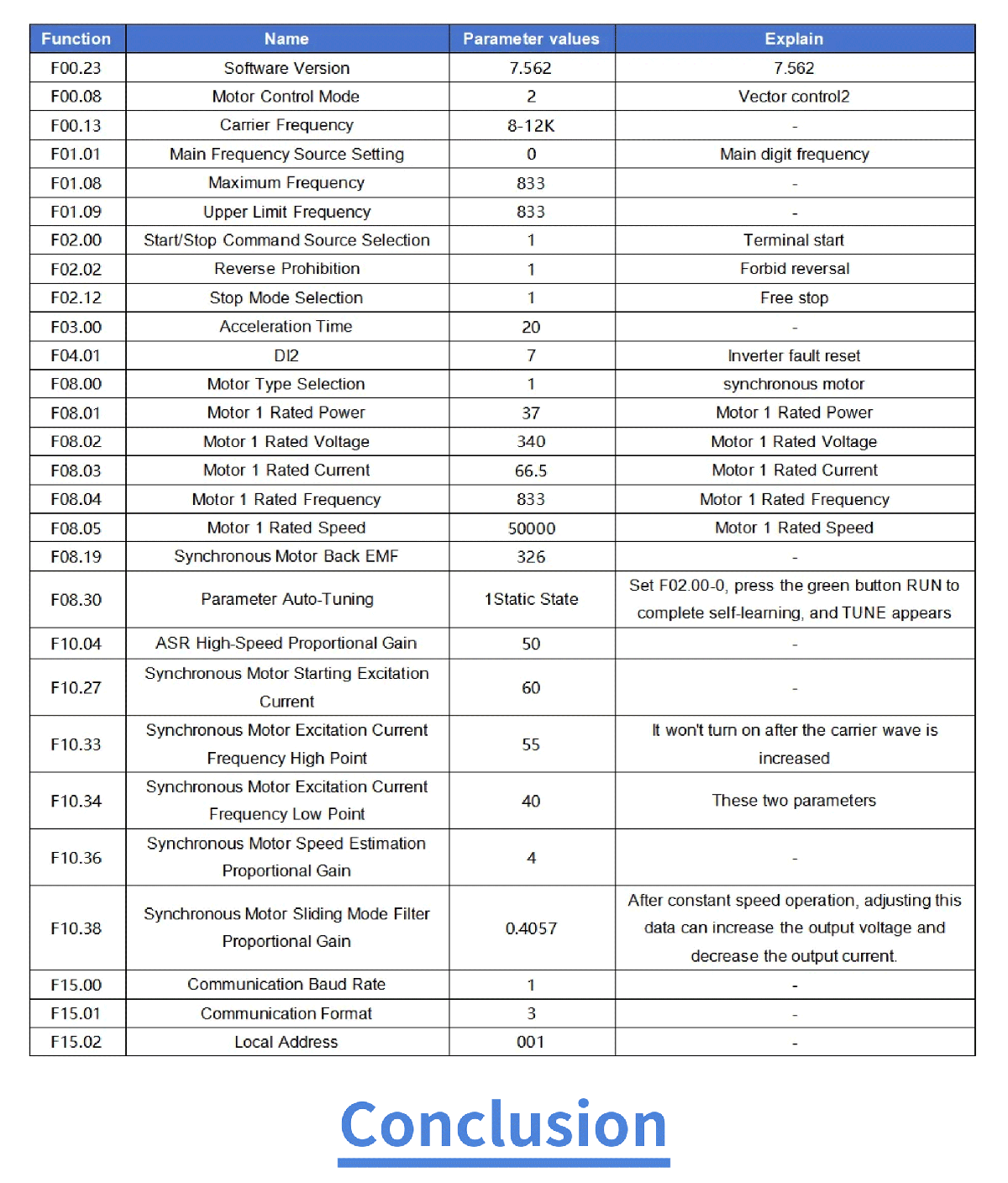
In summary, FR20 inverter, with its core advantages of high-precision vector control, low harmonic interference, and high-reliability design, precisely matches the technical requirements of air-suspended centrifugal blowers. It effectively solves the pain points of traditional control systems, such as large start-stop shocks, unstable air pressure, and high energy consumption. It is perfectly suited for application scenarios with high requirements for air source cleanliness, energy saving, and noise reduction, helping enterprises achieve efficient, energy-saving, and stable production operations, and has won widespread recognition across various industries.