
Solar pumping projects require careful evaluation before selecting suitable equipment. Price is usually one of the first factors considered, but it does not fully represent the value of a product. Performance stability, control functions, maintenance requirements, and supplier support also influence long-term operation.
For businesses planning solar water pumping systems, understanding how cost connects with quality can support clearer decisions. Reviewing technical features and application needs together helps buyers select solutions that match project conditions.
Factors such as operating environment, pump capacity, energy source conditions, and future expansion plans also need attention during the selection process. A detailed comparison of a solar pump inverter allows businesses to understand product value more clearly and prepare a more practical approach for different pumping applications.
The Real Cost Behind Solar Pump Inverters
The purchase price of a solar pump inverter is only one part of the overall investment. Installation, maintenance, energy management, and system compatibility also affect the total cost during operation. A product with suitable functions may reduce unnecessary adjustments and improve project planning.
For this reason, buyers often evaluate an Inverter Manufacturer based on more than pricing. Production experience, technical capability, and understanding of application requirements are also important factors when comparing different options in the market.
Cost evaluation should include hardware design, protection functions, and control performance. Solar pumping systems may operate under different environmental conditions, so the inverter needs to match pump characteristics, power requirements, and daily operation patterns.
Key Performance Factors for Pumping System Selection
Solar pump inverters help convert solar energy into power suitable for pump operation. Their functions directly affect speed adjustment, pressure control, and system response. Different applications may require different output ranges and control methods.
The selection process should focus on practical requirements instead of only comparing specifications. Flow demand, water source conditions, installation environment, and future maintenance plans all influence the final decision.
As an OBM-focused company with ODM capabilities, FRECON develops drive products for industrial applications. We combine product design experience with market feedback to support different project requirements. Our solutions focus on practical functions and system compatibility.
By considering application feedback and technical requirements together, we continue to improve product designs and provide options that are suitable for various industrial scenarios and project development processes.
Control Functions and System Integration Considerations
Control accuracy is an important part of solar pumping performance. Stable pressure regulation can help maintain smoother operation when water demand changes. Closed-loop control technology allows the system to respond more effectively to pressure variations.
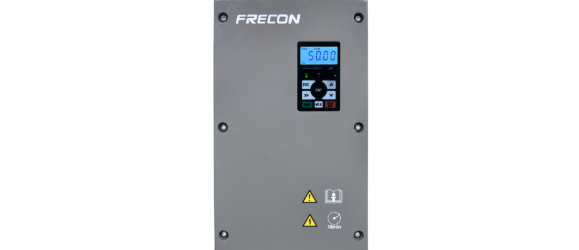
The HS580 Series Hydraulic Servo Drive supports 4 pumps parallel control and includes a built-in brake unit up to 110kW, helping simplify installation arrangements. The product also provides protection functions such as overcurrent, over voltage, and short circuit protection.
Communication functions are another factor for system integration. The series includes standard built-in CAN and RS485 communication, with optional EtherCAT and Prol bus support. These options allow the drive to connect with different control systems according to project requirements.
Supplier Support in Long-Term Project Planning
Choosing a suitable inverter supplier involves reviewing technical communication, product support, and cooperation experience. Project developers and system integrators often need assistance during product selection, installation preparation, and application adjustment.
A reliable cooperation process helps businesses understand whether the product matches actual operating conditions. Technical documents, application guidance, and response efficiency can influence project progress and future maintenance arrangements.
We continue to communicate with partners about different application needs and improve our product development based on practical feedback. This approach helps us understand challenges faced by equipment manufacturers and system integrators.
Clear communication during each project stage also helps identify possible adjustments earlier and supports smoother coordination between suppliers, technical teams, and end users throughout the application process.
A Balanced Approach to Cost and Quality Evaluation
Selecting solar pump inverters requires a complete view of both cost and quality. Price comparison can provide basic information, while performance features, system integration, and supplier capabilities offer deeper evaluation points.
The HS580 Series Hydraulic Servo Drive reflects our focus on pressure control, protection design, and communication flexibility. Through product development and technical improvement, FRECON works with partners to explore suitable drive solutions for different industrial applications.
The role of an inverter supplier is not limited to providing equipment. Support during project planning and technical communication can also affect the overall experience. Careful comparison helps buyers understand the practical value of different options.
For companies reviewing a solar pump inverter solution, balancing investment costs with functional requirements can create a clearer selection process. Considering application conditions, control performance, and service support together allows businesses to prepare more suitable systems for long-term operation.
The evaluation of a solar pump inverter should focus on how well the product fits the project instead of only looking at the initial price. We continue to provide drive solutions that connect technical features with application needs, helping partners make decisions based on real operating conditions.