

Motors are simple devices at heart—apply voltage, and they spin. But achieving precise control over how fast they spin and with how much force is a different challenge entirely. As a professional company in the fields of industrial automation, energy efficiency, and green new energy, we at FRECON have over ten years of experience in inverter development and application. We have seen how proper speed and torque control transforms industrial processes. In this article, we explain the fundamental methods motor drives use to control these two critical parameters, and why choosing the right vector control inverter makes all the difference.
Voltage/Frequency Control: The Basics
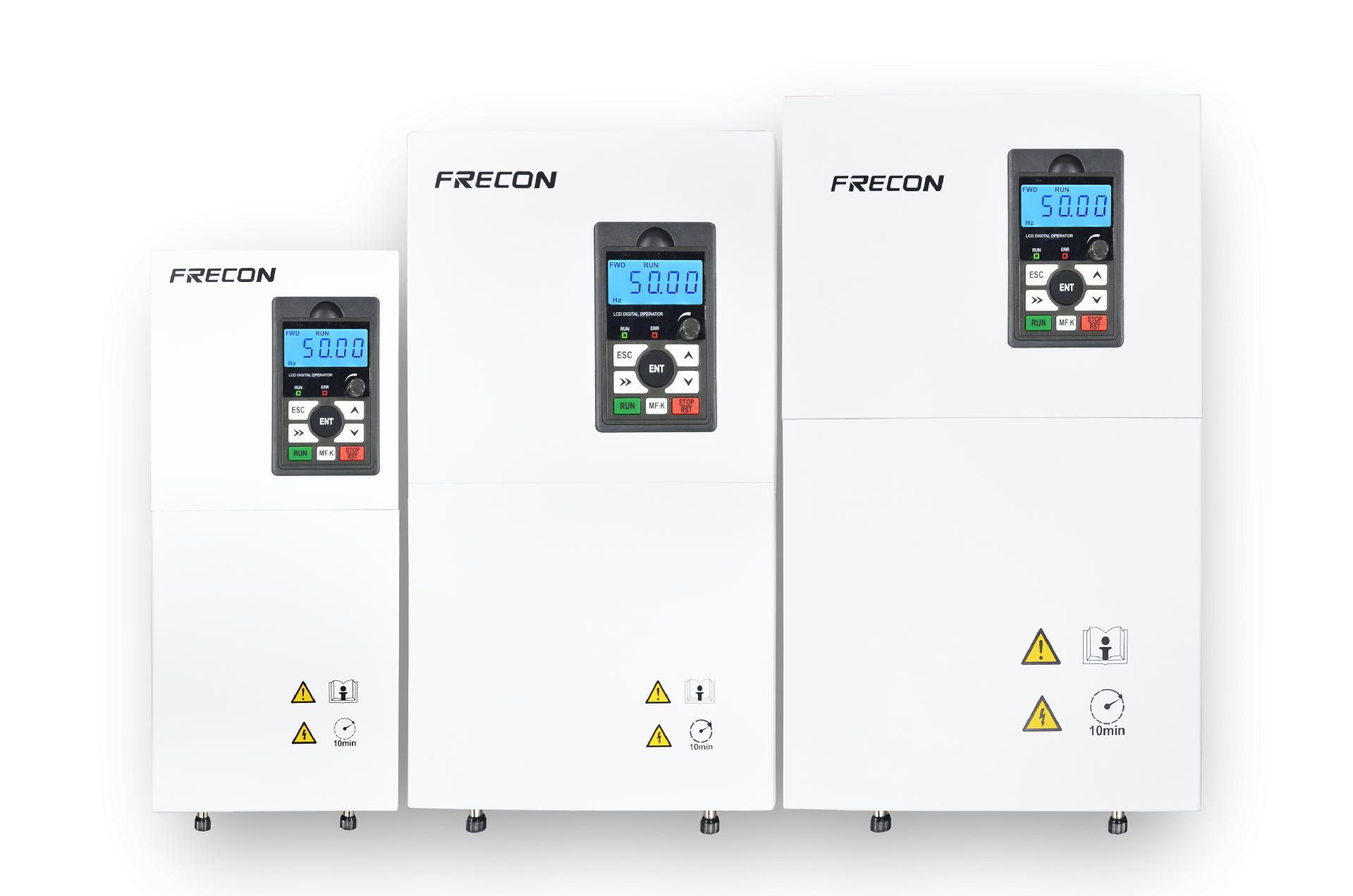
The simplest method of controlling motor speed is V/F control. The drive maintains a constant voltage-to-frequency ratio as it adjusts output frequency. Lower frequency means slower motor speed. This works adequately for fans, pumps, and other variable torque loads where precise speed accuracy is not critical. However, V/F control struggles at low speeds. Torque output drops significantly, and the motor may stall under load. For applications requiring better low-speed performance, a more advanced vector VFD is necessary. FRECON's FR20 Series General Vector Inverter offers both V/F and vector control options, giving you flexibility across different applications.
Vector Control: Independent Torque and Speed Regulation
Vector control, also known as field-oriented control, treats a motor's current as two separate components: one that produces magnetic flux and one that produces torque. By independently controlling these components, a vector control inverter achieves performance similar to a DC drive. Speed accuracy reaches 0.1% or better, and full torque is available even at zero speed. This makes vector VFD technology ideal for cranes, hoists, extruders, and conveyors that must hold position or accelerate under heavy loads. The FR20 Series delivers built-in vector control along with practical features: a built-in DC reactor, standard C3 filter, built-in brake unit, and built-in STO (Safe Torque Off) function for enhanced safety.
Advanced Features That Enhance Control
Beyond basic algorithms, hardware features improve real-world performance. The FR20 Series supports a common DC bus solution for multi-drive systems, allowing regenerative energy sharing and reducing braking resistor requirements. The independent air duct design keeps electronics cool even in dusty environments, while through-wall installation capability separates cooling airflow from clean control areas. Parameter copy via keyboard simplifies commissioning across multiple drives, and an optional USB port supports program upgrades and host computer connection. All FRECON products comply with EMC and CE standards, and we have obtained more than 40 patents and copyrights.
Achieving Precision with the Right Drive
Speed and torque control is not magic—it is engineering. FRECON brings over a decade of experience to every vector control inverter we manufacture. Choose FRECON for applications that demand precision, reliability, and advanced features. Let our vector VFD technology take your motor control to the next level.